The Work Behind a Western County Fair
The work behind a Western county fair spans livestock care, exhibits and volunteer shifts. Learn how to prepare for a visit and see what sustains the gathering.
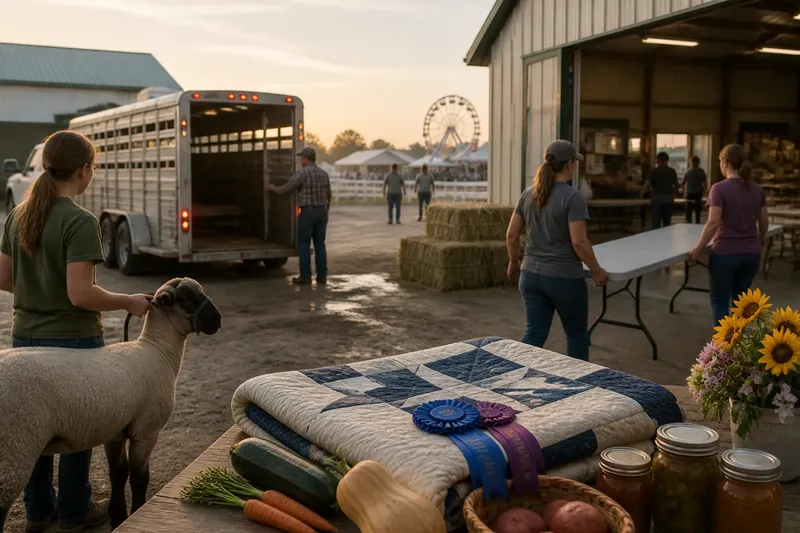
At dawn, a county fairground can be all gates, bedding and half-finished signs: a stock trailer backs towards the livestock barn while volunteers carry tables into the exhibit hall. The work behind a Western county fair begins well before the midway opens, and continues in small tasks throughout the event. To see how the fair takes shape, follow its season from agricultural routines to the public gathering they support.
Start with the fair’s working calendar
County fairs do not all follow the same schedule or serve the same mix of communities. Some centre on livestock and youth projects; others give substantial room to local crafts, food, music and public services. Look at what local organisers, exhibitors and visitors prepare for rather than assuming every fair follows one template.
Before the event, check the official programme, exhibitor handbook and volunteer notices. These show what the community brings into public view: market animals, garden produce, quilts, machinery, baked goods, demonstrations or a combination. The fair board or county extension office may also list meetings and entry deadlines.
Make a simple calendar with three columns: agricultural preparation, fairground preparation and public events. Add dates confirmed by the organisers, then note who is responsible for each task. This puts different kinds of labour in one picture without treating them as interchangeable.
Build the season around care, not spectacle
For livestock exhibitors, fair week is the visible end of a long period of daily care. Feeding, watering, grooming and handling happen on ordinary days, not just before a judge or a crowd. Youth projects may also involve record books, budgeting and learning to explain an animal’s care to visitors.
Check the exhibitor handbook before deciding what to watch. A market animal entry, a breeding animal and a small-animal display may have different routines and judging criteria. The handbook sets out eligibility, arrival times and animal-care rules; follow directions around pens, and do not feed or touch animals without permission.
Imagine a young exhibitor with a sheep that needs regular grooming and a project record to complete. The family sets aside an evening for care, then reviews the record after chores; by fair week, the sheep is groomed and the exhibitor can describe the work to visitors and judges. The public display depends on those ordinary routines.
Visitors can make that work easier to see by moving slowly through the barns, reading signs and letting exhibitors finish a task before asking questions. A specific question about feed, equipment or a project’s schedule is more useful than treating an animal as a prop for a photograph.
Prepare the grounds as a shared workplace
In the weeks before opening, fairground preparation turns ordinary facilities into temporary public space. Pens need organising, exhibit tables assigning, rubbish and recycling points placing, signs making legible and routes keeping clear. Food vendors, maintenance crews, emergency services and volunteers may each have arrangements to coordinate.
Walk the grounds from a visitor’s point of view, or review the site map if you cannot be there. Check entrances, water and toilets, routes to the barns and exhibit hall, and signs between those places. The aim is not only to make the fair inviting, but to let exhibitors and staff keep working as visitors move through.
Choose a volunteer task that fits your abilities and availability, such as setting up displays, answering questions, checking entries or helping with a clean-up shift. Confirm the time, meeting point and contact person in case plans change. For work involving equipment, animals or restricted areas, follow the fair’s briefing rather than improvising.
Keep the site map, daily programme, information desk location and first-aid location handy on your phone or in a paper programme. A little orientation helps prevent visitors from blocking busy work areas while searching for the next event.
Use fair week to connect display with daily work
When gates open, the fair brings agricultural work into a public setting. Judging, demonstrations and exhibit halls let people see skills and products usually part of a household, farm or workshop routine. Each display is selected by exhibitors, placed in a category by organisers and assessed under that class’s rules.
Spend time beyond headline events. Read the labels beside produce and crafts, listen to a demonstration, and notice how the programme moves between livestock, food, practical skills and entertainment. The details reveal a meeting point rather than a single show with one purpose.
Respect posted boundaries and ask before taking close photographs. If a barn aisle is crowded or an exhibitor is preparing for a class, return later. The fair is open to the public, but working areas still require care and concentration.
Say you arrive with children during a busy afternoon and want to see a livestock class and the exhibit hall. You check the entrance programme, choose a class with a listed start time, then plan to visit the hall afterwards; the result is a clear order for the visit, though the schedule or crowd may still change. This makes it easier to decide what to skip if time runs short.
Close the season with useful follow-through
After the final event, exhibitors and organisers still have work to do. Animals return to their usual care routines, borrowed equipment needs returning, exhibits are collected and grounds are cleared. For volunteers, a clean-up shift is part of the fair’s operation, not an afterthought.
If you helped, ask the coordinator what remains and how to leave your area ready for its next use. If you entered an exhibit or youth project, check collection instructions and note any feedback worth carrying into next season. Visitors can follow the fair board’s notices for meetings or ways to support future events.
Keep a few observations while the season is fresh: which areas helped you understand local work, where signs were unclear and which events made room for conversation. Send specific suggestions through the organisers’ stated channels, rather than assuming a busy fair can absorb every change at once. That gives the next planning season something concrete to consider.
What should visitors and volunteers check before taking part?
What should I read before going to a county fair?
Check the current programme, grounds map and visitor information for event times, entry arrangements and access guidance. For livestock barns or exhibit halls, look for rules about touching animals, photography and restricted areas.
How can I learn about agricultural work at the fair?
Visit the barns and exhibit hall when you have time to read signs and speak with exhibitors. Ask about a specific routine or project, and wait if someone is handling an animal or preparing an entry.
Can I volunteer for a single shift?
Check the fair’s volunteer notices or contact the coordinator; roles and shift arrangements differ by community. Ask what tasks need help, what briefing is required and whether a short commitment fits the schedule.
What makes a fair more than an entertainment event?
Its programme can bring agricultural care, local skills, public judging and community service together. The preparation behind each display and the people keeping the grounds working make those connections visible.
The work behind a Western county fair is easiest to recognise when you look beyond opening day: care becomes display, preparation makes room for gathering, and practical tasks continue after the crowd leaves. Check the local programme, respect working spaces and notice who is tending each part of the event. The fair’s season is also a chance to see how a community shares skills and responsibility in public.