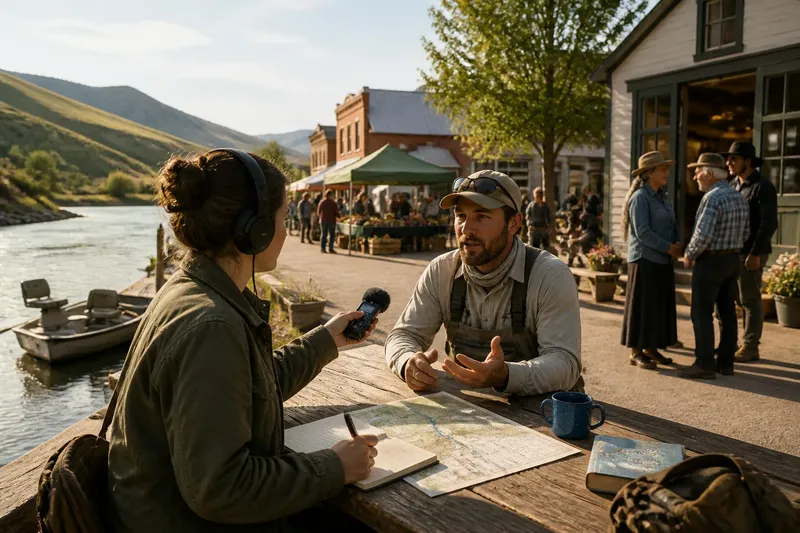
Main Street or Riverfront for a First Stroll?
Choose a main street or riverfront stroll by the details you want to notice, from shopfronts and civic landmarks to water, bridges and changing views.
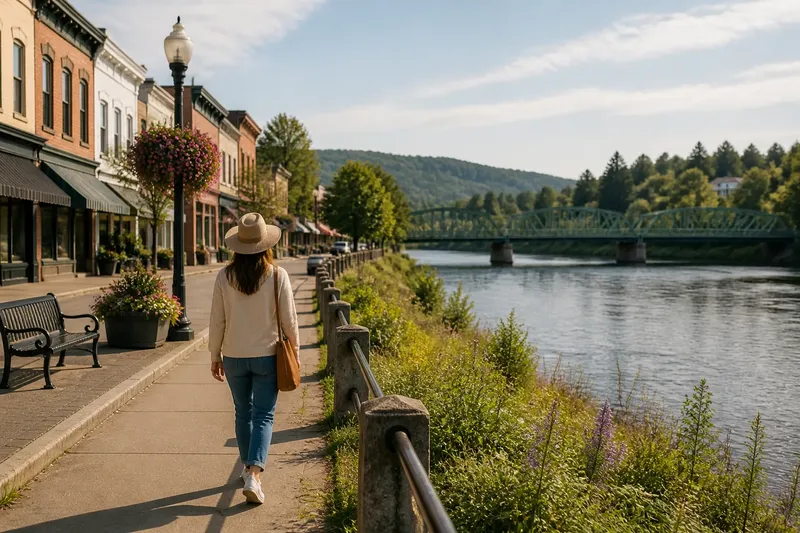
For a first stroll in an unfamiliar Western town, choose Main Street if you want to read its everyday public life; choose the riverfront if you want to follow water, open space and the town’s relationship with its landscape. The best route depends less on which looks more scenic and more on what you hope to notice as you walk.
A main street often puts storefronts, civic buildings and local routines close together. A river path may offer a quieter view of banks, bridges, parks and the ways people have made room for water. Both can tell you something about a place, but they tell it at different distances and speeds.
Choose the route by the details you want to notice
Start with one question: are you curious about how the town meets its daily needs, or about how it sits beside its river? That distinction is useful in communities where the two routes are not connected, or where the river path begins well beyond the central business district.
- Choose Main Street if you want to see active shopfronts, public notices, cafés, libraries, older façades or the pattern of errands that brings people into the centre.
- Choose the riverfront if you want to follow a continuous walking path, look at bridges and banks, sit near the water or notice how trails, parks and built areas meet the river.
- Choose a short link between them if you are interested in how the town connects its centre to the water, and there is a clear, comfortable route between the two.
These are starting points, not rules. A quiet main street can be rewarding for its architecture and street layout; a busy riverfront can be full of people, play and local activity.
Main Street puts local routines within easy view
A town’s main street is a useful place to notice how its centre works. Look for the mix of businesses, the direction shopfronts face, whether doors open directly on to the pavement and how civic places fit among shops. A post office, library, courthouse, café or community noticeboard can reveal what people come downtown to do, without requiring you to know the town in advance.
Give façades a closer look rather than treating the street as a line of names. Notice changes in brick, timber, stone, metal awnings and window proportions. A newer building beside an older one may show how the commercial centre has changed, while a blank wall or a wide parking entrance may tell you where walking feels less continuous.
Street-level details are often the most revealing: a bench placed in the shade, a hand-lettered sign, a delivery entrance, a row of planters or a public notice pinned inside a window. They are small observations, but together they make the street legible as a place used by residents, workers and visitors rather than simply passed through.
Main Street is the better fit if you enjoy stopping often. You can pause at a display, read a sign, step into an open public building or sit with a drink, then resume without losing your bearings. Keep the walk considerate: leave doorways clear, check opening signs before entering and avoid photographing people at close range without asking.
The riverfront makes the town’s edge easier to read
Beside a river, attention shifts from shopfronts to the route itself. Notice whether the path follows the water closely or rises above it, where bridges cross, and how the banks change from open ground to planted edges or built embankments. A bend can reveal how the river moves through the town; a bridge can show how roads, paths and neighbourhoods connect across it.
Look beyond the water’s surface. Benches, fishing access, picnic areas, trail signs and crossings show where people are invited to stop or move through. Fences, planted strips and signs can indicate that some sections are protected or managed differently. The riverfront can feel open, but access is not necessarily continuous; a route may end, change character or divert away from the bank.
This is often the stronger choice if you want an unhurried walk with fewer decisions about where to stop. The path may be easier to follow than a sequence of shopfronts, and the view can change as you move. It may offer less detail about the town’s daily commerce, though, especially if the route sits away from the centre.
Before setting out, check a local map for path access and the starting point. Stay on marked public routes, respect closures and use ordinary care near water, uneven surfaces and changing weather. Local signs and directions from a visitor centre or public information desk can help clarify which sections are open.
Decide whether a connecting walk is worth the detour
Some towns make it easy to visit both settings. A short route from the commercial centre to a riverside park can show how people move between the places where they shop and the places where they relax. The connection itself may be worth noticing: a pedestrian bridge, a tree-lined street, a trail entrance behind a civic building or a busy road that separates the two.
Do not assume that a river you can see from Main Street is reachable on foot. The route might cross private land, follow a road without a comfortable pavement or require a longer circuit than the map suggests. If the link is unclear, choose one destination rather than improvising through a car park or an unmarked track.
Say you have an hour before meeting someone at a café on Main Street and would like to understand the town’s layout. Start with the civic buildings and shopfronts, then follow a clearly marked path towards the river only if the map shows an easy public connection. If the river is further away, stay downtown and notice how the street’s businesses and public spaces fit together; that is a complete first walk, not a failed attempt to see everything.
Choose between Main Street and the riverfront for your plans
Which route is better if you want to meet local businesses?
Main Street is usually the more direct choice because shops, cafés and service businesses are gathered at street level. You can browse without committing to a long outing, while keeping in mind that a closed door or limited opening hours may leave the street quieter than expected.
Which walk suits a slower, quieter pace?
A riverfront path may suit you if it has a continuous public trail, benches and places to pause away from vehicle traffic. Check the route first; some river edges are short, busy or interrupted, so a leafy setting does not automatically mean an easy stroll.
Where can you get a stronger sense of how the town is laid out?
Main Street is often easier for seeing the centre’s blocks, civic landmarks and points of activity. The riverfront can be more helpful for understanding crossings, open space and the town’s edge, particularly when a path runs past bridges or neighbourhood connections.
What should you choose if you have limited time?
Pick the route closest to where you already are, then focus on a few details rather than trying to cover the whole town. A compact Main Street visit can suit a stop between errands; a nearby riverside path can suit a brief pause outdoors.
Make the first walk manageable and observant
Set a loose destination before you leave: a public building, a prominent bridge, a riverside bench or a café you can return to. That gives the stroll a clear shape without turning it into a checklist of sights. Carry a phone map, wear shoes suited to the surface and leave room to change direction if a path is closed or a street is busier than expected.
As you walk, choose one kind of detail to pay attention to. On Main Street, that might be thresholds: which buildings open directly on to the pavement, and which make visitors approach from a car park? At the river, it might be crossings: where can a walker get from one side to the other, and what does each crossing connect?
That small focus can make the two routes feel distinct without forcing either into a ranking. Main Street is often the clearer introduction to commerce and civic life; the riverfront is often the clearer introduction to water, open space and movement through the town. If you can visit only one, choose the setting that answers the question you brought with you.
For a first stroll, the right choice is the one that lets you notice something specific and return with a clearer sense of the place. If you later walk the other route, you will have a useful point of comparison: the town’s everyday centre on one hand, and its river edge on the other.